Archive | June, 2010

Continuing Education: The Importance of Experimentation

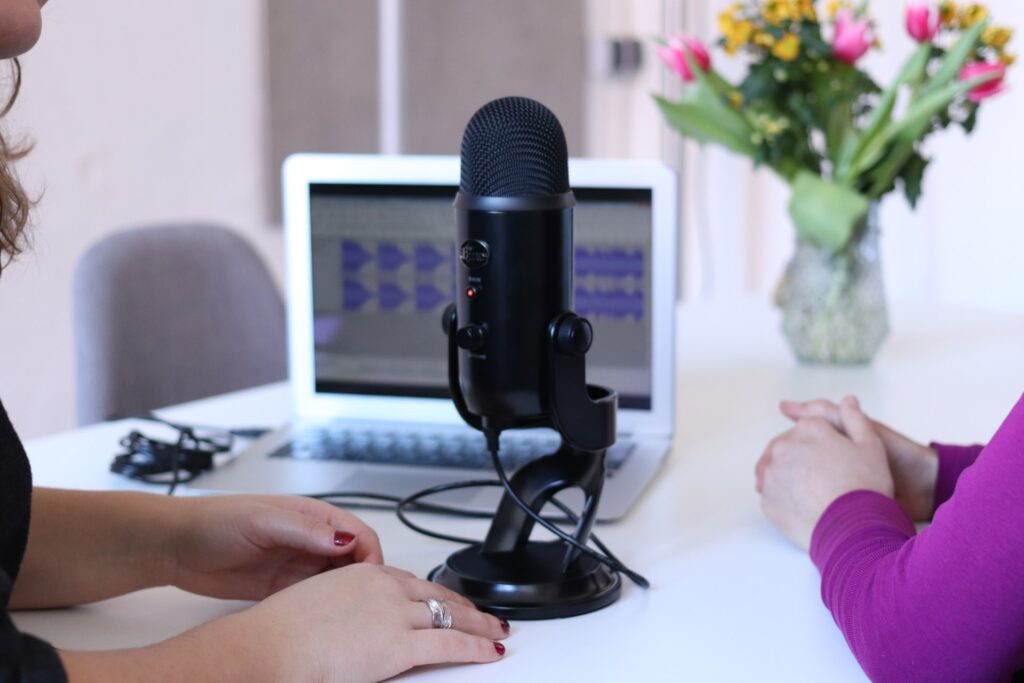
I went to a three-hour lesson on pod-casting on Sunday afternoon. It was the first in a two-part course I’m taking at London’s adult learning centre, CityLit. The course is designed to introduce beginners to the art of internet broadcasting.

I’m a big fan of taking classes in adulthood. Since moving to London four years ago, I’ve taken classes in fiction writing and acting. In Chicago, I took classes in freelance writing and memoir. And once, many moons ago, I took a class in beginning Hebrew (not to mention the continuing ed. class to end all continuing ed. classes: I’m Jewish, You’re Not.)

According to a report released jointly by the Penn State University Office of Outreach Marketing and Communications and University Continuing Education Association in 2006, up to 45 percent of colleges and university enrollment in the United States is from adult learners. Revenues for continuing education rose 67 percent at the institutions surveyed in this report from 2004.

People go back to school as grown-ups for lots of different reasons. Sometimes, it’s to pursue a hobby. You try something new (or return to something old.) You meet new people. You get out of your comfort zone. Above all, you have fun. (And yes, for the record, I’m still eyeing that course at CityLit entitled Actors Singing From West End to Broadway.)

Sometimes you go back to school because you need to re-tool professionally. From 2008 to 2018, the labor force is projected to grow more diverse and have more workers age 55 and older. Simultaneously, the highest-paying jobs – those that require at least a bachelor’s degree – are expected to increase at a rate faster than that of overall job growth, according to the U.S. Bureau of Labor Statistics. So it’s  a good bet that we’ll be seeing more Americans – particularly boomers – sharpening their pencils and buying new notebooks as they gear up for a second or third career.

But the main advantage of adult education is that it enables you to experiment. Chris Brogan – guru of all things social media – talked about this recently. Brogan thinks about experimentation in terms of labs. (He’s currently experimenting with a new travel site called Man On The Go.)

His main point is that experimentation is crucial to growth. Why? Because you test drive new ideas. You collaborate. You enjoy the fun of failure, as Gretchen Rubin likes to put it. Above all, you create ideas of your own, rather than just reporting on the ideas of others.

Which is why I’m learning how to podcast. I’m not yet sure exactly how I’ll incorporate podcasting into my life, and whether it will be more of a hobby or something that I use in work. But I have a few ideas. More importantly, I know that if I don’t start experimenting now – creating a lab, as it were – I’ll never find out.

And who knows? Maybe I’ll be the next Cezanne

*****

Apologies that my weekly tips for adulthood post did not appear yesterday. Due to the editing schedule over at www.PoliticsDaily.com, that particular post will come out next week.

*****

And speaking of Politics Daily, be sure to check out my post today on the new Pro-Islam ads running in London. It’s kind of the UK’s answer to the whole “What Would Jesus Do?” campaign. Except that it’s “What Would Mohammed Do?” Check it out…

Image: Podcasting by hawaii via flickr under a Creative Commons license.

Add to FacebookAdd to NewsvineAdd to DiggAdd to Del.icio.usAdd to StumbleuponAdd to RedditAdd to BlinklistAdd to TwitterAdd to TechnoratiAdd to Furl

The Death Of The Library

I walked into my local public library in London the other day and got a rude shock. All of my favorite librarians were gone. They’d been replaced by machines. Where the circulation desk once stood — manned by a friendly soul with whom I’d chat about politics or the weather or the latest London Review of Books — I now swiped my library card and pushed a button that said “borrow” or “return.”

They’d also done some remodeling. This particular branch sits in an elegant 1930s building located in the garden of the house where the poet John Keats wrote his “Ode to a Nightingale.” The main room — once cluttered with books that literally spilled onto the floor — now is a shadow of its former self. Rather than books, the main thing on display would appear to be tables — artfully dotted around the room as if this were a café or the premier-class lounge for an airline. (“It’s so bright even druggies wouldn’t inject here,” quipped a cynical online reviewer.)

And it’s not just in the United Kingdom where libraries are morphing into something else . . . if not dying out completely. I’ve seen numerous articles about the demise of them in the United States, whether it’s the closure of branches in Boston, reduced hours in Los Angeles, or the architectural makeovers that render library books merely decorative, as in Cambridge, Massachusetts.

Read the rest of this article at www.PoliticsDaily.com…

Image: NYC-Midtown: New York Public Library Main Building via Flickr under a Creative Commons License.

Add to FacebookAdd to NewsvineAdd to DiggAdd to Del.icio.usAdd to StumbleuponAdd to RedditAdd to BlinklistAdd to TwitterAdd to TechnoratiAdd to Furl

Friday Pix: Recommended Reading For The Weekend

Every Friday I point you to some recommended reading around the blogosphere:

1. I’m a sucker for understated British humor. Here’s a hysterical post in The Guardian by the British actor/writer/comedian David Mitchell on the new toilet-paper free toilet.

2. Also funny is Stuff White People Like’s take on why white people like the World Cup.

3. For the avid readers out there, here are the top five children’s books for grown-ups from Brain Pickings. I’m especially fond of The Little Prince.

4. I haven’t seen Sex and The City 2 (nor do I plan to) but this scathing review at The Stranger made me laugh out loud. (Hat tip: Communicatrix.)

5. In light of my recent post on frugality, I loved this article in Mint about how to go on a date without breaking the bank. (Hat Tip: @urbanmusewriter who wrote it!)

6. Finally, in the Department of Cool, check out this video on Gimundo about what Los Angeles would look like without cars. (Hat tip: The Happiness Project)

And, as always, please do follow me on Twitter!

Add to FacebookAdd to NewsvineAdd to DiggAdd to Del.icio.usAdd to StumbleuponAdd to RedditAdd to BlinklistAdd to TwitterAdd to TechnoratiAdd to Furl

The Gores' Break-Up: Why I'm Not Sad

I think it’s best if I just come out and say this up front: I’m not really sad that Al and Tipper Gore split up.

Yes, I know. I’m an outlier. Nearly everyone I know — and certainly everyone I’m reading — is outright depressed by this separation.

Don’t get me wrong. I think it’s a shame. And it’s a shame because — as my colleague Melinda Henneberger wrote recently — they seemed like a couple who were genuinely in love. Between the 40 years of marriage and the four beautiful kids and the whole high school sweetheart thing and, yes — the kisses — they really looked like they were in it for the long haul.

But somehow, I was much sadder when Susan Sarandon and Tim Robbins split up. I was also sadder when — gulp — writer and public radio commentator Sandra Tsing Loh split with her man (and then went on an anti-marriage crusade.)

Why is this?

Read the rest of the article on www.PoliticsDaily.com

Image: But It’s Over Now by Electronic Eye via Flickr under a Creative Commons License

Add to FacebookAdd to NewsvineAdd to DiggAdd to Del.icio.usAdd to StumbleuponAdd to RedditAdd to BlinklistAdd to TwitterAdd to TechnoratiAdd to Furl

Tips For Adulthood: Five Ways To Live Frugally

Every Wednesday I offer tips for adulthood.

I’ve just moved. One of the things that happens when you move is that you get a chance to reassess your life . You reconnect with your past, you re-imagine your future and you start noticing things about your life that might have passed you by because you hadn’t opened a certain cupboard in four years.

One of the things I’ve noticed is how frugally our family lives in London compared to when we lived in the United States. Some of that has to do with the global economic recession of the past few years, some of it with the exchange rate, and some of it with the exorbitant cost of living in London.

But we’ve also made some smart choices about how to cut costs and I thought I’d share some of those with you today:

1. Don’t buy books. OK, this may sound insane coming from someone who regularly posts about books and reading, but it’s a good piece of advice. Owning a lot of books not only wastes a tremendous amount of space, but you have to ask yourself  how often you actually re-read them. (In my case: almost never.) Books are expensive. The average hardcover book retails for about $26 right now. Whereas in the library, you’ve got loads of choices and they’re all free. So as long as you request them sufficiently in advance, the sky’s the limit to how many books you can read without ever spending a cent. (OK, I’m not counting late fees….)

2. Don’t buy movies. I have a good friend here in London who watches a lot of films. But whenever I recommend one to him, he always says “Great! I’ll go buy it this afternoon!” This friend isn’t loaded and I always wonder why on earth he spends so much money on movies when you can subscribe to something like Netflix (US) or LoveFilm (UK) and see all the movies you like for a low monthly fee. (Or get them at the library for nothing. See above). We own a few films, but most of them are for the kids and almost all have been presents. It just strikes me as a really easy way to cut down your budget without losing out on anything.

3. Make your own coffee. This one is a no-brainer. If you add up all the money you spend on buying coffee out everyday – let’s say you spend $2.50/day on some kind of fancy coffee drink, that adds up really quickly:  $16/week, $74/month, $888 a year to be precise. (This is, by the way, is exactly the sort of logic we used to use when I worked at Chicago Public Radio in order to exhort listeners to donate to our station.) For $800, you can buy a really nice espresso machine these days, and possibly even a grinder to go with it. I’ve gotten to the point where I actually prefer my own coffee to the stuff they sell on the High Street. I can even send you a video on the optimal way to tamp your espresso (free of charge.)

4. Buy second-hand items. For years I resisted this. Part of the reason was that my mother always shopped at vintage clothing stores when I was growing up and for that reason alone, I was hell-bent on not doing it. But now I see her infinite wisdom. And it’s not just clothing. We’ve furnished half of our flat in London with (really nice) second-hand furniture that we’ve acquired from other American families who come here for a few years and then move on. Over the past few years, we’ve chalked up sofas, rugs, waffle makers, night lights, you name it…and all at a really moderate price. I’m a member of a local women’s group that lists such second-hand sales as part of its services. But many schools, churches and other community organizations do this sort of thing regularly. So keep your eyes peeled…there are some real treasures out there and people are often dying to offload them.

5. Do some travel writing. Granted, this one is going to be easier to implement for the journalists and writers out there. But it’s amazing what kinds of deals you can get on hotels and travel arrangements if you agree to do a review. We’ve done a ton of traveling around Europe over the past few years – to places like Helsinki and Vienna and Croatia – and most of it has been possible because I arranged to do a review of the hotel where we were staying. Note: you don’t necessarily have to be a professional writer to score this kind of gig. One site that I write for is mostly just a bunch of mums offering tips for family-friendly travel. And once you’ve done one of these reviews, getting more gigs is a piece of cake. Try it! You *will* like it.

Image: Unphotographable Otto Espresso Machine by CoffeeGeek via Flickr under a Creative Commons License.